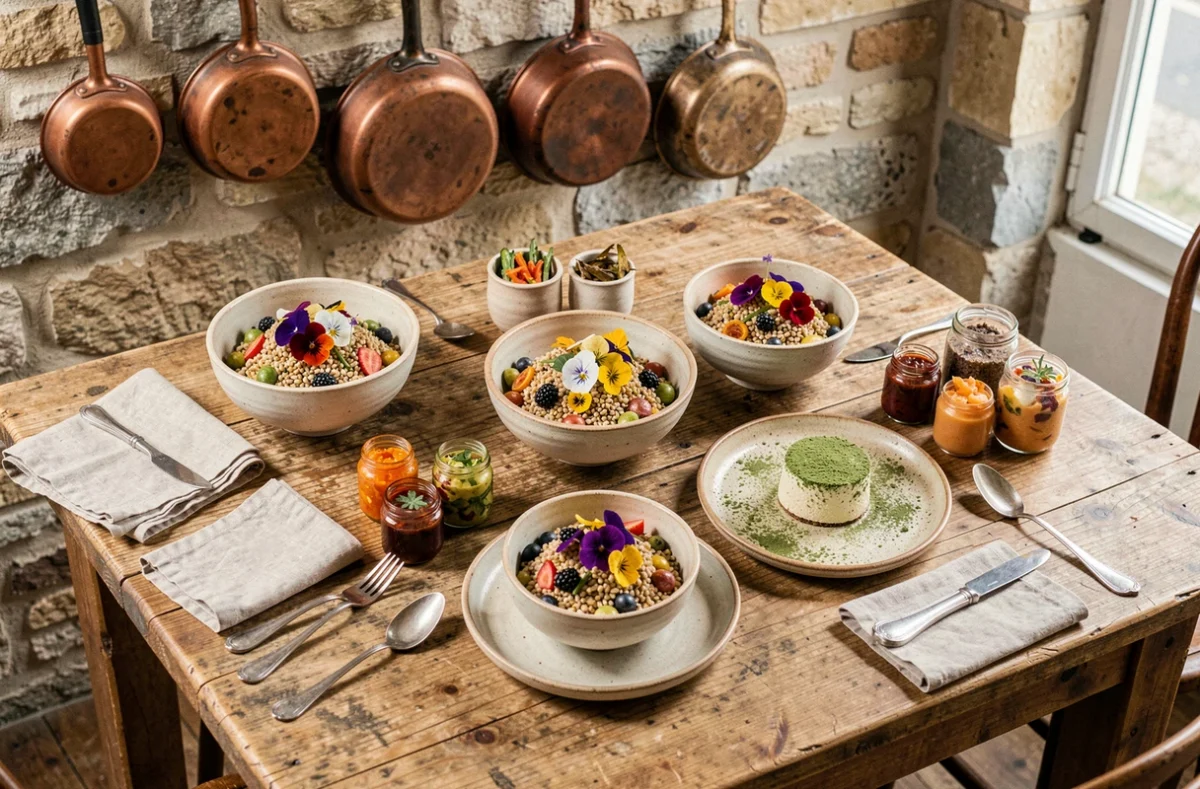
What culinary trends have really influenced French plates in 2024? Between the return of traditional recipes, the rise of plant-based proteins, and the new regulatory constraints imposed on restaurateurs, the forces shaping gastronomy this year do not all fall within the same category. This article compares the major culinary trends of 2024 across three axes: consumer adoption, identified barriers, and concrete impact on professional offerings.
Culinary Trends 2024: Comparative Table of Key Dynamics
| Trend | Main Driver | Main Barrier | Impact on Professional Offerings |
|---|---|---|---|
| Plant-based cuisine (desserts, beverages, yogurts) | Environmental awareness, diversification | High price and taste deemed too bland by half of respondents (OpinionWay / Fleury Michon, March 2024) | Expansion of dessert menus, but caution on main dishes |
| Traditional dishes (blanquette, pot-au-feu, flan) | Search for comfort, nostalgia | Long preparation time, cost of meat cuts | Return of slow-cooked dishes in traditional dining |
| Anti-waste and valorization of food waste | Legal obligation since January 1, 2024 (source separation without threshold) | Sorting logistics, cost of equipment | Menu reformulation, portion adjustments |
| World cuisine and fusion | Curiosity, influence of social media | Supply of specific ingredients | Increase in hybrid menus (Franco-Asian, Franco-Mexican) |
This table highlights a clear gap: the most publicized trends (fusion cuisine, plant-based) are not necessarily the ones that most transform the daily lives of professionals. The obligation to sort food waste since January 2024 has, for example, much more immediate operational repercussions than a craze for buckwheat.
Plant-based Proteins in 2024: Desserts Outpace Steaks
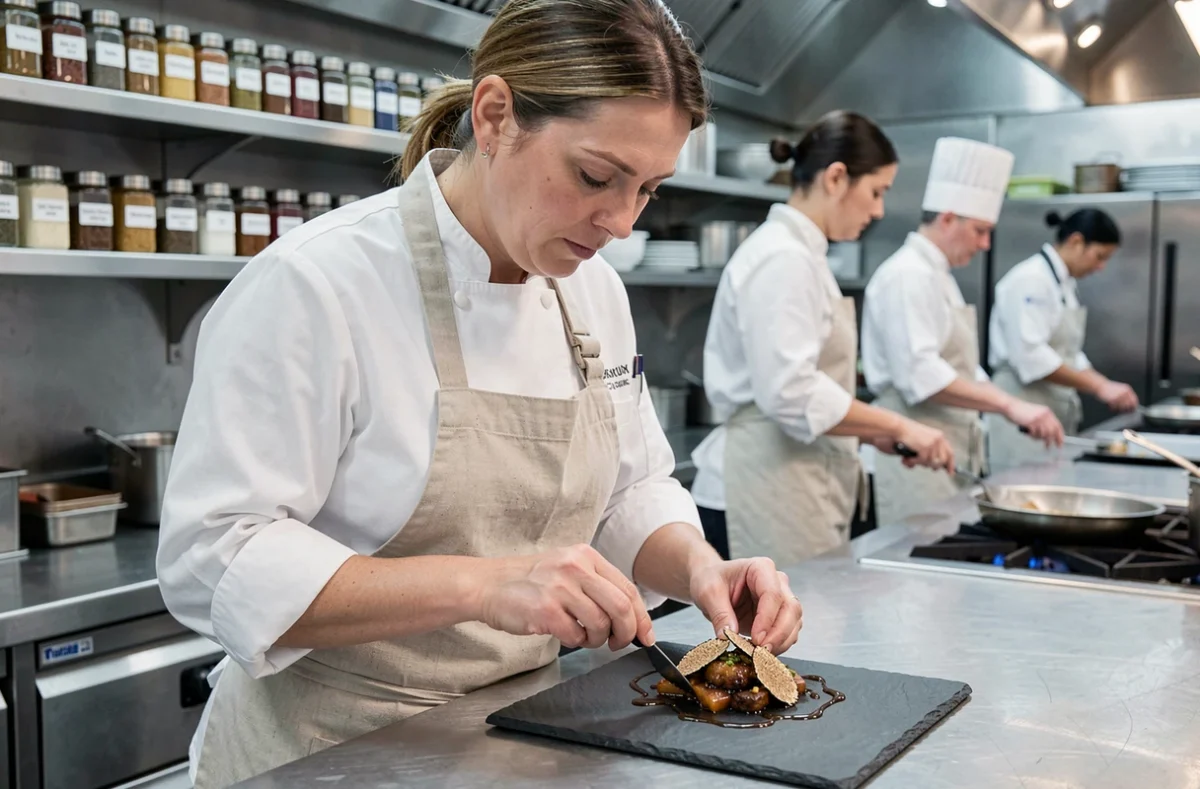
Most competitors approach plant-based options from the angle of meat substitutes. The figures tell a different story. The 2024 barometer from Protéines France and Terres Univia indicates that plant-based desserts are the most consumed plant protein products each week, ahead of meat alternatives. Yogurts, creams, and plant-based drinks are therefore driving the trend much more than lentil or pea steaks.
This discrepancy is partly explained by persistent barriers. The OpinionWay survey for Fleury Michon, conducted in March 2024, reports that half of respondents cite the high price and half the taste deemed too bland as reasons for not consuming these products more. The ProVeg survey from 2023 confirms these two barriers at the top of the list.
For chefs and restaurateurs, the lesson is pragmatic. Sweet flavors and creamy textures are more appealing than meat imitations. Betting on an oat panna cotta or a coconut milk flan is more likely to attract customers than a bland plant burger sold at the price of a meat dish. Food trend enthusiasts can also discover the Gourmet Galopin website to follow the evolution of these recipes throughout the year.
Food Waste and Sustainable Gastronomy: The Regulatory Constraint Changing Menus
Since January 1, 2024, source separation of food waste applies to all producers, without volume threshold. This obligation, stemming from the AGEC law, directly affects restaurants, caterers, and canteens. It is no longer an editorial choice or a marketing stance: it is a daily management constraint.
In practical terms, professionals must rethink the management of peels, preparation leftovers, and unsold items. Several consequences are emerging on menus:
- Reformulation of recipes to use the entirety of vegetables (carrot tops in pesto, candied citrus peels, broths from trimmings)
- Adjustment of served portions to limit plate returns, with modular formats (small or large hunger)
- Sourcing from short supply chains to reduce packaging volumes and transport-related waste
Valorizing peels is no longer a militant gesture; it is an operational obligation. This regulatory pressure partly explains why dishes based on old vegetables or local products are gaining ground on menus: they allow for the use of the whole product and limit waste.
Traditional Dishes and Local Flavors: What the Numbers Don’t Show
The resurgence of blanquette, pot-au-feu, or flan is unanimously highlighted in food media. All competitors mention it. The less explored angle concerns the tension between this nostalgic trend and the economic constraints of 2024.
Inflation on food products has pushed consumers towards recipes using less noble cuts of meat (chuck, shank, beef cheek), traditionally associated with slow-cooked dishes. The return of traditional dishes is therefore not solely sentimental: it also responds to a price-per-kilo calculation. Braising cuts are significantly cheaper than grilling cuts.
In dining, this trend aligns with the rise of local products. A pot-au-feu prepared with vegetables from the neighboring farmer and a piece of beef from regional farming checks several boxes simultaneously: short supply chain, anti-waste (long cooking of economical cuts), comforting experience. Chefs who manage to intersect these parameters attract both nostalgic customers and those concerned with sustainability.
Fusion Cuisine and World Ingredients: Uneven Enthusiasm by Region
Fusion cuisine (Franco-Japanese, Franco-Mexican, Franco-Korean) occupies a visible place on social media. In practice, its deployment remains concentrated in major metropolitan areas where sourcing specific ingredients (miso, gochujang, tomatillo) is accessible.
Outside of Paris, Lyon, or Bordeaux, restaurateurs adapt fusion by incorporating one or two exotic ingredients into classic bases rather than creating entirely hybrid menus. A soy-glazed foie gras, a yuzu lemon tart, or a pho broth revisited with local seasonal vegetables illustrate this pragmatic approach.
This geographical difference deserves attention: the culinary trend as experienced by the majority of French people in 2024 does not resemble what is shown on the Instagram accounts of Parisian chefs. Local terroir and accessibility of products remain the true arbiters of daily menus.
The gourmet trends of 2024 are better understood through their constraints than their promises. The obligation to sort food waste, the price of plant proteins, and inflation on meat products weigh more heavily on plates than fleeting trends. The most structuring data remains the regulatory framework: when the law mandates sorting without a threshold, the entire chain, from producer to chef, adapts its recipes.