A pH higher than 7.8 opens the door to algae and makes chlorine almost ineffective, even if the water looks pristine. Changing the order of cleaning, brushing before vacuuming, spreads dirt instead of removing it. As for sand filters, they are appealing due to their simplicity, but without frequent backwashing, they release impurities back into the pool.
Avoiding weekly alkalinity checks or choosing a robot that is too small for your pool exposes you to unnecessary costs and repairs that could be avoided. Effective maintenance revolves around specific habits, tailored to the pool’s configuration and the rhythm of the seasons.
Understanding Your Pool: What to Know Before Getting Started
Owning a pool at home is not just about enjoying a few laps in the sun. Before realizing this project, it is useful to know each element that makes up the pool and determines the ease of maintenance. The filtration system plays a central role in the quality of the pool water: it consists of a filtration pump, a sand filter, or solutions like a cartridge filter or glass filter, not to mention the skimmer, drain, and return jets. A filtration system suited to the pool’s capacity and usage conditions the clarity and balance of the water.
The pool protection is essential from the installation stage. Here are the main options to consider:
- Pool cover
- Safety barrier (compliance NF P90-306)
- Alarm system (NF P90-307)
- Safety cover (NF P90-308)
- Pool enclosure (NF P90-309)
Each device aims to reduce the risk of accidents while complying with regulations.
The choice of lining is also very important: a liner ensures waterproofing and protects the structure. Also consider the issue of heating (heat pump, solar cover), which will depend on the region and intended use. Automation systems can ease daily management by regulating chlorine, pH, temperature, or filtration.
To delve into each technical aspect or find pool tips based on your project’s configuration, discover the pool page of Maison Pro, which can be invaluable. Analyzing the soil type, usage, bottom shape, or equipment compatibility allows for solid and coherent choices for the future.
What Actions and Products for Always Clean and Healthy Water?
Achieving clear and pleasant pool water requires regular checks and suitable pool products. Each week, analyze the water using test strips or an electronic tester. Three parameters deserve your full attention: pH (ideally 7.2 to 7.6), TAC (between 80 and 120 mg/L), and hardness (TH) (10 to 25 °F). If the pH deviates, disinfectants lose their effectiveness and algae can quickly appear.
Disinfection remains the cornerstone of healthy water. Chlorine (1 to 3 mg/L) is the standard, but other solutions exist: bromine if the pH is high, active oxygen for a gentler treatment, PHMB to avoid odors, or salt electrolysis that transforms salt into natural chlorine. To correct an unstable pH, use suitable products (pH increaser, pH decreaser), treat algae as soon as they appear with an algaecide, and in case of cloudy water, opt for a flocculant.
Mechanical cleaning complements chemical treatment. Several tools make this task effective:
- Pool robot
- Vacuum
- Skimmer
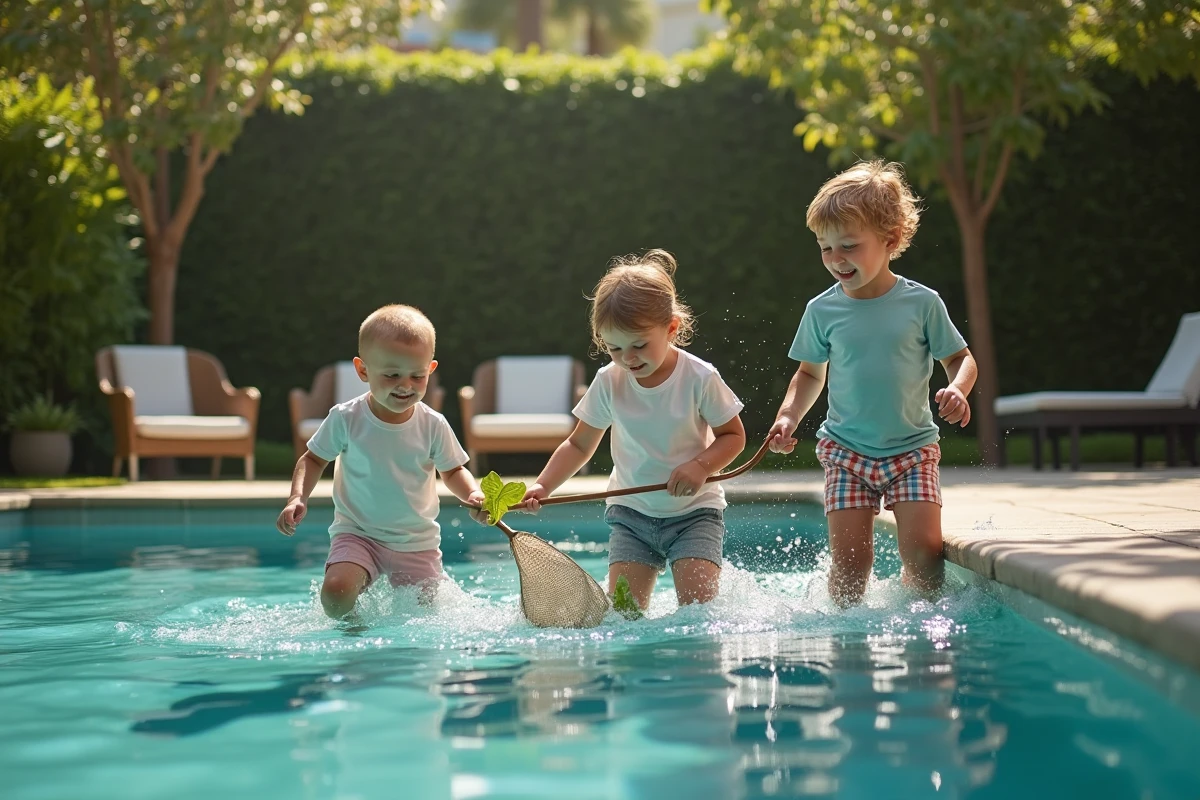
These accessories remove leaves, dust, and debris from the bottom and walls. Regular brushing of the waterline prevents limescale deposits and stubborn stains. It is the combination of these actions and efficient filtration that guarantees clear water, season after season.
Everyday Troubles: How to Avoid Classic Maintenance Mistakes
Season after season, the pool owner faces recurring issues. Limescale settles on the waterline, algae make their appearance with the first rise in temperature, and a clogged filter slows down circulation. All these problems, often predictable, compromise the quality of swimming. As soon as the water temperature rises or usage increases, it is necessary to adjust the filtration duration to avoid bacterial overgrowth. Regularly monitoring the flow rate and noise of the filtration pump helps detect failures before they worsen.
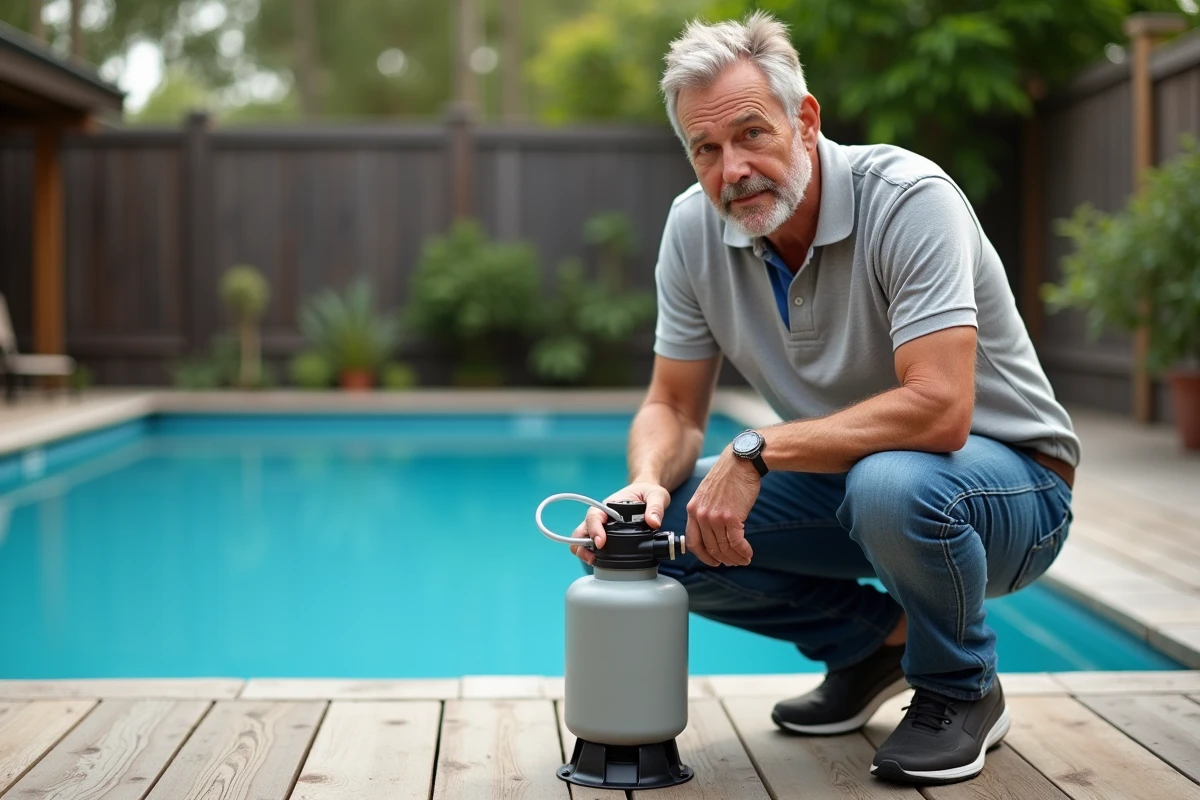
To limit the accumulation of leaves, insects, and dust, using a skimmer every morning makes a difference. The backwashing of the sand filter, to be done every two weeks, restores the system’s efficiency and prolongs the fineness of filtration. The liner also requires regular maintenance with a anti-limescale product to avoid white marks and preserve its waterproofing.
Forgetting winterization or rushing the start-up exposes the pool to costly repairs. Choose the winterization method (active or passive) based on the region. As for swimmer safety, cover, barrier, alarm, it is not an option but a regulatory requirement. Vigilance and method: this is the duo that allows you to enjoy a pristine pool without unpleasant surprises.
A structured maintenance routine, a few targeted actions, and vigilance throughout the season: the pool rewards those who know how to take care of it. Clear water is never a matter of chance, but a reflection of constant attention.